

For too long, wealth management has been catering to institutional and high-networth clients. Can AI make a difference with wealthtech for mass-affluent retail investors?
The economics of wealth management and private banking makes them inaccessible to retail investors who do not have the wealth and investment capacities that high-networth and institutional investors do. It is simply impossible to provide that level of personalized and risk-management services for the mass affluent.
Consider the numbers: while there are about 60 million HNWIs globally, at least another 630 million are considered mass affluent. This translates to financial institutions having to increase their existing private banking and wealth management resources by 10 times.
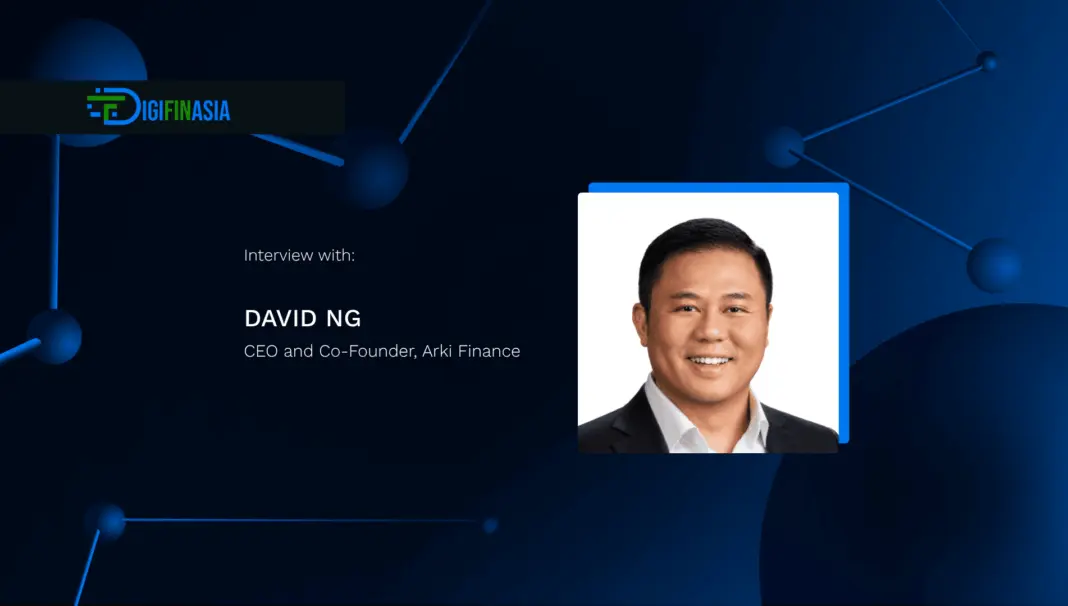
But can AI really make a difference and democratize wealth management with new wealthtech platforms? We find out from David Ng, CEO and Co-Founder, Arki Finance, a Singapore-based fintech startup using AI to democratize wealth management.
Why is wealth management, especially private banking, still largely serving only higher networth clients? What is available to the mass affluent, and is it enough?
Ng: At its core, it comes down to economics. Private banking is a high-touch, relationship-driven model, and that model is expensive to deliver. A strong private banker may manage only 40 to 60 client relationships, and each one requires compliance, portfolio construction, regular reviews, ad hoc advice, and a broader layer of institutional support. That works when a client has US$2 million or more in investable assets, because the revenue supports the cost base. Below that level, the economics become much harder to justify.
I saw this firsthand at my previous firm. We built one of the top ETF businesses in Singapore, launched record-setting products, and grew assets under management from US$3.7 billion to more than US$15 billion. But the clients being served were still overwhelmingly institutional and high-networth. That was not simply a commercial choice. It reflected how the industry was built. Product design, distribution, and advisory models were all optimized for the top end of the market, not to deliver truly personalised support to the mass affluent.
Today, the mass affluent are often left with two imperfect options. On one side is traditional advisory, which is typically too expensive or inaccessible below certain asset thresholds.
On the other are robo-advisors, which promise to democratize investing but in practice often deliver standardized portfolios based on broad risk categories. You answer a questionnaire, get placed into a handful of categories, and receive a portfolio that looks very similar to thousands of others.
That is not true wealth management. It is efficient categorization. And for people with real financial complexity, it is often not enough. Many mass affluent investors are trying to balance liquidity, medium-term goals, and long-term wealth creation all at once. They do not need generic allocation. They need guidance that reflects how their financial life actually works.
What do investors lose out on when guidance is too generic or out of reach?
Ng: The most immediate loss is behavioral. When investors do not receive guidance that is specific to their own situation, they fall back on shortcuts. They follow headlines, market sentiment, or the views of friends and social media. In practice, that usually means buying when confidence is high and selling when fear takes over, which is the opposite of disciplined investing.
Generic guidance does very little to correct that. In some cases, it makes it worse, because if a portfolio does not clearly reflect your own goals, there is very little reason to stay committed when markets become uncomfortable.
The second loss is opportunity. A 30-year-old with a strong savings rate and a long runway should be invested very differently from a 55-year-old approaching retirement, even if both describe themselves as having the same risk tolerance. But the nuance goes further than that. Two people of the same age, with similar incomes and similar stated risk profiles, can still have very different financial realities: different liquidity needs, family obligations, tax positions, career paths, or personal goals.
When guidance cannot capture that complexity, people end up in portfolios that may be acceptable in aggregate, but are not truly right for anyone.
The third loss is trust, and that may be the most important of all. Many mass-affluent investors feel, correctly, that the financial system was not really designed around their needs. When that happens, they disengage. They keep excess cash sitting in low-yield accounts, delay investing, or avoid the market altogether.
That is often described as a literacy gap, but I think that misses the point. In many cases, it is a rational response to an industry that has not yet offered them support in a form that feels relevant, accessible, and worth trusting.
How does AI help make personalized investment support more scalable, and which economies in the Asia Pacific region are well placed to drive this next wave of wealthtech?
Ng: The traditional constraint in wealth management has always been that scale and personalization work against each other. The more tailored the advice, the more expensive it becomes to deliver, and the fewer people you can serve. AI changes that equation.
What AI and machine learning make possible is the delivery of institutional-grade analytical capability at a consumer-level cost. Things like portfolio optimization, scenario modelling, risk analysis, and dynamic asset allocation no longer need to be reserved for clients with $10 million to invest. They can increasingly be made available to someone starting with $10,000. That is a very significant shift. And because these systems improve with more data and more interactions, the quality of personalization can deepen over time rather than becoming diluted by scale.
That is fundamentally different from the traditional advisory model, where growth often means stretching human resources more thinly. With AI, the system can become more responsive, more adaptive, and more precise as usage increases.
In Asia Pacific, Singapore is the clearest place to begin. It combines a strong regulatory environment, deep fintech support, high savings rates, and a sophisticated wealth ecosystem. Singapore is also a natural place for a platform like Arki to launch and scale, because it combines investor sophistication with a clear need for more accessible personalization.
Beyond Singapore, Hong Kong, Japan, and Australia are all strong candidates. Hong Kong has deep capital markets infrastructure and an experienced investor base. Japan represents a particularly compelling opportunity because of the very large pool of household wealth still sitting in cash and deposits. Australia, through its superannuation system, has already created a culture where investing is part of everyday financial life.
Then there is Southeast Asia more broadly, especially markets like Indonesia, Thailand, and Vietnam. These are earlier-stage markets, but they are developing quickly and are home to digitally native populations that increasingly expect financial tools to be as intelligent, personalized, and intuitive as every other app they use.
What are new wealthtech platforms doing differently to help make investment strategies clearer and more actionable?
Ng: The biggest shift is that the best platforms are moving from simple allocation to real guidance. First-generation platforms largely told investors what to buy. The new generation is focused on explaining why a strategy makes sense, and adapting that guidance as a person’s circumstances evolve.
At Arki, for example, we think about money through a three-bucket framework: Cash, Income and Growth. That maps much more naturally to how people actually think about their finances. Cash is about liquidity and peace of mind. Income is about stability and steady yield for medium-term needs. Growth is about long-term compounding through higher-return assets that can ride through short-term volatility. That is far more intuitive for most people than asking them to interpret something like a traditional asset allocation split in abstraction. It gives them a framework they can actually use in real life.
The second difference is continuous personalization. Traditional platforms often deliver a portfolio and wait for the investor to come back for a review. AI-native platforms are different. They are designed to monitor changes, process new information, and adjust recommendations as a user’s needs evolve. In simple terms, it is the difference between handing someone a static map and giving them a live GPS.
The third is transparency. One of the long-standing weaknesses of traditional wealth management is that many clients do not fully understand what they own, why they own it, or what trade-offs are being made on their behalf. Newer platforms are addressing that by making the portfolio logic much more visible. Investors can see not just the recommendation, but the reasoning behind it, the role each part of the portfolio plays, and how changes in goals or circumstances affect the overall plan.
That matters because clarity leads to better behavior. When people understand what their money is doing and why, they are more likely to make confident decisions and stay invested through volatility. And over the long run, that discipline is often one of the biggest drivers of better outcomes.